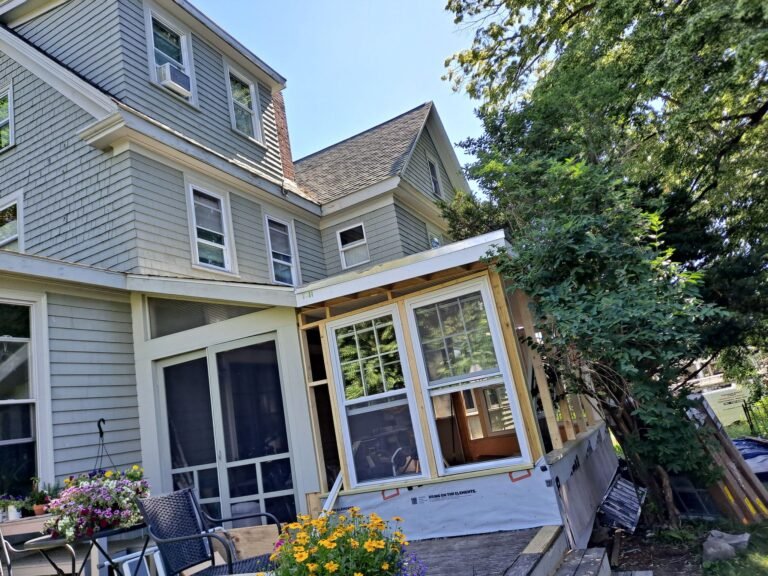
The Carpentry Details That Make a Remodel Look Custom
When people picture a remodel, they usually picture the big-ticket items — a new deck, a repainted exterior, an updated kitchen layout. But a lot of what actually makes a finished project look custom rather than generic comes down to carpentry details that are easy to overlook until you notice a project that doesn’t have them.
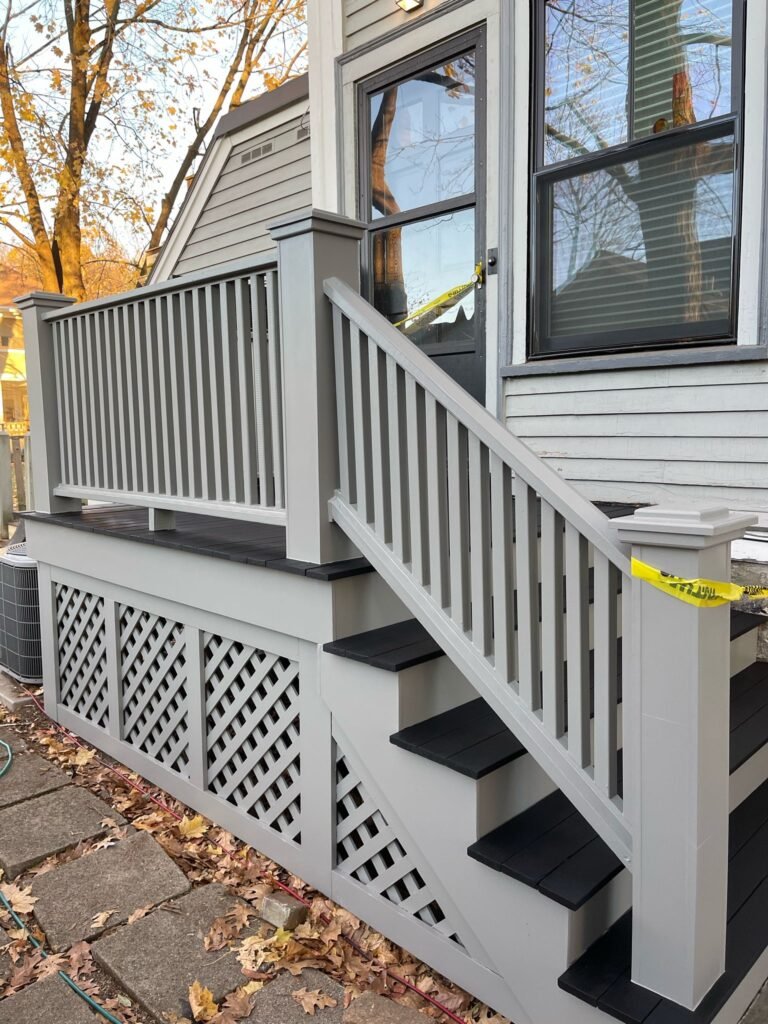
Railings, balusters, and trim work are some of the most-touched, most-seen elements of a porch or deck, which means small inconsistencies stand out immediately — uneven baluster spacing, mismatched reveals, or trim that doesn’t sit flush. Getting these details right takes more time than a rough installation, but it’s the difference between a project that looks “fine” and one that looks intentional.
Skirting under a porch or deck hides the structural framing underneath, but it also needs to allow airflow to keep moisture from building up against the framing. Good carpentry balances the look you want with the ventilation the structure actually needs — which is why lattice patterns and panel sizing are worth planning, not an afterthought.
Pressure-treated lumber, cedar, and composite trim all behave differently outdoors — they expand, contract, and weather at different rates. Mixing materials without accounting for that is a common source of gaps and cracking a season or two after installation. Matching the material to the location (ground contact, weight-bearing, purely decorative) is part of doing the carpentry right the first time.
These are the details we pay attention to on every project. See more of our carpentry work, or contact us to talk through your project.